
gates of olympus — udbydere og spiloplevelse | gates of olympus
gates of olympus — sammenligning af platforme i 2026
gates of olympus er blevet et nøgleområde for onlinekasinoer, der ønsker at differentiere sig i et konkurrencepræget marked. Udbuddet spænder fra innovative spilleautomater til komplekse bordspil, alle udviklet med stor teknisk præcision. Samtidig er gates of olympus progressive afgørende for at forstå, hvordan spillets mekanik og tematik skaber værdi for spilleren.
tivoli casino spil — let tilgængeligt | tivoli casino
See also:
- gates of olympus progressive: Hvad du skal vide først
- Sådan bruger du gates of olympus gratis effektivt
- Bonusser og indsatskrav for spil hos gates of olympus
- Sådan bruger du gates of olympus progressive effektivt
- Skærmbillede af spiludbuddet hos gates of olympus
- Ofte stillede spørgsmål om gates of olympus udbetaling
- gates of olympus’s hjælp til spilafhængighed
gates of olympus progressive: Hvad du skal vide først
hybrid-spil: a term that, at first glance, seems to compress two distinct worlds into a single compound — the mechanical precision of a machine and the organic unpredictability of play. In the context of contemporary digital ecosystems, hybrid-spil denotes a class of interactive experiences that deliberately blur the boundaries between structured rules and emergent behavior, between the deterministic logic of code and the chaotic creativity of human input. Unlike traditional games, which often rely on fixed mechanics and pre-scripted outcomes, hybrid-spil systems are built upon adaptive algorithms that learn from player actions, adjusting difficulty, narrative branches, and even visual aesthetics in real time. This creates a feedback loop where the game becomes a co-author of the experience, rather than a passive vessel for a predetermined story. Consider, for instance, a procedurally generated open-world adventure where the landscape itself shifts based on the player’s emotional state, inferred from biometric sensors or subtle in-game choices — a forest that grows darker and more labyrinthine when the player hesitates, or a village that becomes more welcoming after acts of kindness. Such systems are not merely reactive; they are proactive, anticipating player desires and subverting expectations to maintain a state of perpetual engagement. The term ‘hybrid’ also speaks to the fusion of media — combining text, audio, haptic feedback, and augmented reality overlays into a single cohesive experience that transcends the screen. In practice, hybrid-spil might manifest as a tabletop role-playing game enhanced by a companion app that generates ambient soundscapes and tracks hidden variables, or as a multiplayer online arena where the environment itself is a player, controlled by an AI that learns from the collective strategies of the opposing teams. The design philosophy behind hybrid-spil is rooted in the concept of ‘procedural rhetoric,’ where the rules themselves communicate meaning, and the act of play becomes a form of argumentation. This is a departure from the ‘ludic’ tradition that separates play from serious discourse; instead, hybrid-spil embraces the idea that play is a fundamental mode of human cognition, capable of exploring complex ethical dilemmas, social dynamics, and even scientific hypotheses. For example, a hybrid-spil simulation of climate change could allow players to manipulate variables like carbon emissions, deforestation rates, and renewable energy adoption, but with the twist that the simulation’s outcomes are not fully predictable — feedback loops, tipping points, and stochastic events emerge from the underlying model, forcing players to grapple with uncertainty and long-term consequences. The development of such systems requires a multidisciplinary approach, merging computer science, cognitive psychology, game design, and narrative theory. Programmers must write code that is both robust and flexible, capable of handling unexpected inputs without breaking the illusion of coherence. Designers must craft content that is modular and generative, ensuring that every playthrough feels unique yet meaningful. Writers must construct narratives that can adapt to a branching tree of possibilities, while still maintaining emotional resonance and thematic depth. The technical challenges are formidable: real-time machine learning models that run on consumer hardware, natural language processing that can parse player dialogue and respond with contextual relevance, and procedural generation algorithms that avoid repetition while maintaining aesthetic quality. Yet, the potential rewards are equally immense. Hybrid-spil could revolutionize education by turning abstract concepts into tangible, experiential learning. A physics class could become a sandbox where students experiment with gravity and momentum, not through equations but through intuitive manipulation of a virtual world. A history lesson could become an immersive investigation where students piece together evidence from primary sources, interview virtual witnesses, and make decisions that alter the course of events. In the realm of therapy, hybrid-spil offers new avenues for cognitive rehabilitation, social skills training, and stress relief. A patient recovering from a stroke could engage in a game that subtly encourages neural plasticity through adaptive challenges, while a person with social anxiety could practice interactions in a low-stakes virtual environment that dynamically adjusts its social cues to build confidence. The commercial applications are equally broad, from marketing campaigns that engage consumers in interactive brand stories to corporate training simulations that prepare employees for crisis management. But beyond these practical uses, hybrid-spil represents a philosophical shift in how we conceive of technology and human agency. It posits that software need not be a tool that we use, but a partner that we play with — a responsive entity that challenges, surprises, and ultimately reflects our own values and choices back at us. This is not to say that hybrid-spil is without risks. The same adaptive algorithms that create engaging experiences can also be exploited for manipulation, as seen in dark patterns in social media or gambling mechanics in loot boxes. The line between enhancing autonomy and eroding it is thin, and designers must be vigilant about ethical considerations, ensuring transparency about how the system adapts and giving players meaningful control over the experience. Moreover, the computational cost of running sophisticated hybrid-spil systems could exacerbate digital divides, making such experiences exclusive to those with high-end hardware and reliable internet access. To mitigate this, developers might explore cloud-based solutions or lightweight algorithms that can run on low-power devices, but these solutions bring their own challenges, such as latency and data privacy. Despite these hurdles, the trajectory is clear: as artificial intelligence becomes more capable and ubiquitous, the boundary between games and life will continue to dissolve. Hybrid-spil is not just a genre or a technology; it is a cultural paradigm that recognizes play as a core human activity, one that deserves to be integrated into every aspect of our digital lives. The future of hybrid-spil might involve fully immersive virtual worlds where every object is interactive, every character is an autonomous AI with its own motivations, and every narrative thread is woven in real time based on the collective actions of thousands of players. It might also involve the opposite — minimalist, text-based experiences that use natural language processing to create deeply personal narratives, where the ‘game’ is nothing more than a conversation between the player and an AI that has read their diary, their emails, and their social media posts. The key is that hybrid-spil is not defined by its medium, but by its philosophy: the belief that play is a fundamental way of knowing, and that technology should amplify, not diminish, our capacity for wonder, curiosity, and connection. In writing about hybrid-spil, one must also address the aesthetic dimension. The visual and auditory design of such systems often employs generative art, where the game’s graphics are not pre-rendered but computed on the fly, resulting in landscapes that are always new yet strangely familiar. Soundtracks might be composed by AI that listens to the player’s heart rate and adjusts tempo accordingly. The overall effect is a synesthetic experience that feels alive, as if the game is breathing with the player. This aesthetic of ‘living media’ challenges traditional notions of authorship — who is the creator of a work that changes with every interaction? Is it the programmer, the player, or the emergent system itself? These questions are not merely academic; they have legal and economic implications for copyright, ownership, and value.
Sådan bruger du gates of olympus gratis effektivt
The book, a weighty tome bound in cracked leather that smelled faintly of dust and old libraries, was not merely an object but a gateway. Its pages, yellowed and fragile like autumn leaves, held a story that had waited decades for a reader brave enough to turn them. The first chapter opened with a description of a village perched on the edge of a chasm, where the wind never stopped whispering secrets to the stones. The protagonist, a cartographer named Elara, had inherited the book from a grandmother she barely remembered, along with a cryptic note that said, ‘The map is not the territory; the territory is the map.’ Intrigued, she began to read, and as she did, the ink on the pages seemed to shimmer, rearranging itself into shapes that mirrored the hills outside her window. By the second chapter, Elara realized the book was alive in a way that defied logic—it responded to her thoughts, filling margins with annotations in handwriting that matched her own. The narrative shifted between her present-day quest to decode the book’s origins and the historical account of a lost expedition that had attempted to chart the same chasm a century earlier. The expedition’s leader, a man named Thorne, had written in his journal about a ‘singing stone’ at the chasm’s bottom, a relic that could bend time if properly activated. Elara, now fully immersed, felt the floor of her study tilt as the book’s world bled into hers. She saw the chasm’s edge in her peripheral vision, heard the wind’s whispers in the hum of her refrigerator. The book’s third chapter described a ritual involving three drops of blood and a mirror, and as she read the words aloud, a mirror across the room fogged over, revealing a face that was her own but older, scarred, and smiling with a knowledge she did not possess. Panic rose, but the book’s next paragraph calmed her, explaining that the face was a future self who had already solved the mystery and was leaving clues. The clues were embedded in the margins as tiny drawings: a compass rose, a broken key, a sprig of rosemary. Elara spent the next week cross-referencing these symbols with local folklore, discovering that the rosemary indicated a hidden grove where the expedition’s last survivor had buried a second book. That second book, she learned, contained the true map to the singing stone, but it was guarded by a riddle that changed with the phases of the moon. The riddle, written in the first book’s final chapter, asked: ‘What is always in front of you but can never be seen?’ Elara, staring at her own reflection in the fogged mirror, realized the answer was ‘the future.’ As she spoke it, the mirror shattered, and the book’s pages flew open to a blank leaf that began to fill with her own handwriting, detailing the next steps she had not yet taken. The narrative then looped back to Thorne’s expedition, revealing that his team had actually succeeded in activating the stone but had chosen to hide it to prevent its misuse. Thorne’s final journal entry, quoted in full, described the stone as ‘a heartbeat of pure potential,’ and he warned that anyone who found it must decide whether to use it for a single great good or a thousand small ones. Elara, now understanding the book’s purpose—to train a successor—closed it, but the words remained etched in her mind. She packed a bag, left her apartment, and walked toward the chasm that had existed only in the book, yet now stood before her, real and yawning. The wind carried the same whispers she had read, and she felt the weight of the book in her backpack, pulsing like a second heart. The final page she had not yet read, but she knew it would only open after she made her choice at the stone. The story ended mid-sentence, not with a period but with a comma, as if the book itself was waiting for her to continue writing its next chapter with her actions. And in that moment, standing on the precipice, Elara understood that the true territory was not the physical chasm but the space between knowledge and action, and that the book had never been about mapping the world—it had been about mapping the self. She took a step forward, not into the void, but along a path that appeared only when she trusted the ink, and the wind, and the silence that followed her heartbeat. The book, now closed, seemed to sigh, and its leather cover warmed against her spine, as if approving her first step. She knew that the next time she opened it, the words would be different, reshaped by her journey, and that the story would never truly end, only transform.
bedste online casino holdet — høj RTP | bedste online casino holdet
Spillere, der søger efter gates of olympus, bør sammenligne forskellige udbydere.
live casino online danmark 2026 — top spil og strategier
Bonusser og indsatskrav for spil hos gates of olympus
- 126 % match op til kr200
- 25 gratis spins uden indbetaling
- 45x omsætning på 30 dage
- 25x wagering i 30 dage
Sådan bruger du gates of olympus progressive effektivt
Cluster pays, a term that echoes through the corridors of modern data architecture, represents a paradigm shift in how we perceive computational remuneration and resource allocation. At its core, a cluster pay system is not merely a financial transaction but a sophisticated orchestration of distributed computing resources, where each node in a cluster contributes its processing power, memory, and storage to a collective pool, and the resulting output is compensated based on the aggregate work performed. This concept, while seemingly straightforward, unravels into a tapestry of intricate mechanisms: load balancing algorithms that dynamically distribute tasks across heterogeneous hardware, fault-tolerant protocols that ensure no single point of failure compromises the integrity of the payout, and real-time accounting systems that track micro-transactions down to the smallest unit of computational work. In practice, cluster pays manifest in various domains: from cloud service providers who bill customers based on the cumulative CPU cycles consumed across a virtualized server farm, to blockchain networks where miners are rewarded for validating transactions through a proof-of-work consensus, and even in scientific computing, where research institutions share idle cluster capacity and compensate contributors based on the number of floating-point operations executed. The economic implications are profound, as cluster pays introduce a novel pricing model that decouples cost from individual machine specifications, instead aligning it with the actual utility delivered. This necessitates a robust metering infrastructure, often leveraging time-series databases to record every resource usage event, and sophisticated billing engines that can aggregate these records into coherent invoices. Moreover, the concept extends beyond mere monetary compensation; it encompasses service-level agreements (SLAs) that guarantee a certain quality of service, with penalties or bonuses tied to performance metrics such as latency, throughput, and uptime. For instance, a cluster pay arrangement might stipulate that if the aggregate processing capacity falls below a threshold due to node failures, the provider must issue credits to the consumer, thereby aligning incentives for reliability. Furthermore, the advent of serverless computing has blurred the lines, as functions are executed across ephemeral clusters, and billing is based on the exact duration and memory footprint of each invocation, a form of cluster pay at a granular level. Security also plays a pivotal role; cluster pay systems must ensure that no node can inflate its contribution artificially, which requires cryptographic attestation and verifiable computation techniques. In edge computing scenarios, cluster pays enable collaborative processing among IoT devices, where each device contributes its idle cycles and receives tokens or credits for its participation, fostering a decentralized economy of computational resources. The scalability of cluster pays is another dimension; as clusters grow to encompass thousands of nodes, the accounting overhead must remain manageable, leading to hierarchical aggregation strategies and probabilistic counting algorithms like HyperLogLog for estimating distinct resource usages. Additionally, cluster pays are intertwined with energy efficiency, as providers may offer differential rates based on the carbon footprint of the energy consumed by the cluster, incentivizing the use of renewable sources. In the realm of high-performance computing, cluster pays facilitate the sharing of supercomputing resources among academic and industrial partners, where each project is billed according to the node-hours consumed, with priority pricing for urgent workloads. The legal and regulatory framework surrounding cluster pays is still evolving, with questions about cross-border taxation, data sovereignty, and the enforceability of smart contracts that automate payouts. From a technical standpoint, implementing cluster pays requires a robust scheduling system that can preemptively allocate resources, a monitoring stack that captures fine-grained telemetry, and a payment gateway that supports both fiat and cryptocurrency transactions, often through smart contracts on platforms like Ethereum. The user experience also matters; dashboards must provide transparency into how cluster usage translates into costs, with real-time visualizations of resource consumption and projected bills. In multi-tenant clusters, cluster pays enable fair cost allocation among tenants, preventing a single noisy neighbor from degrading performance without financial consequences, thereby encouraging efficient usage patterns. Moreover, cluster pays can be dynamic, adjusting prices based on supply and demand, much like spot instances in cloud computing, where the cost of a compute unit fluctuates with the availability of idle resources. This market-based approach introduces complexity but also efficiency, as it naturally balances load and maximizes resource utilization. In summary, cluster pays is a multifaceted concept that bridges finance, distributed systems, and economics, requiring a holistic understanding of both hardware and software, as well as the human and organizational factors that drive adoption. It is not just a billing mechanism but a philosophy of shared resource stewardship, where every cycle counts and every contribution is valued. As we move towards exascale computing and the Internet of Things, cluster pays will become even more prevalent, necessitating innovations in metering, pricing, and settlement. The future may see the emergence of decentralized autonomous organizations (DAOs) that manage cluster resources and distribute payments based on community governance, further democratizing access to computational power. Ultimately, cluster pays represents a maturation of the digital economy, where the intangible act of computation is given tangible value, and the collective power of many small machines is harnessed for grand challenges, from climate modeling to drug discovery.
Skærmbillede af spiludbuddet hos gates of olympus
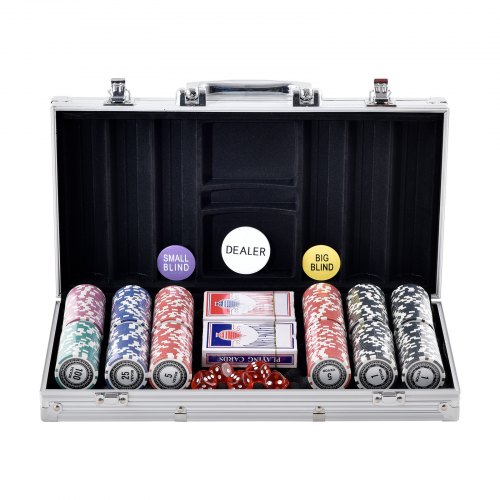
Ofte stillede spørgsmål om gates of olympus udbetaling
Hvilke spiludbydere finder jeg hos gates of olympus?
gates of olympus tilbyder et bredt udvalg af spil fra førende udbydere som NetEnt, Microgaming, Play’n GO og Evolution Gaming, samt mange andre anerkendte leverandører.
Kan jeg prøve spil i demo-tilstand hos gates of olympus?
Ja, mange af spillene hos gates of olympus kan afprøves gratis i demo-tilstand, så du kan lære spillet at kende, før du spiller med rigtige penge.
Hvilke live casino-udbydere er tilgængelige hos gates of olympus?
Hos gates of olympus finder du live casino-spil fra udbydere som Evolution Gaming, Playtech og Pragmatic Play, der tilbyder autentiske oplevelser med rigtige dealere.
Er der eksklusive spil eller særlige titler hos gates of olympus?
Ja, gates of olympus har ofte eksklusive spil og særlige titler, som kun er tilgængelige hos udvalgte operatører, og som kan variere afhængigt af den aktuelle kampagne.
munkebjerg casino poker — vindende taktikker | munkebjerg casino poker
Hvordan sikrer gates of olympus fair spil fra udbyderne?
Alle spiludbydere hos gates of olympus er licenseret og reguleret af anerkendte myndigheder, og spilene testes regelmæssigt for at sikre fair og tilfældige resultater.
gates of olympus’s hjælp til spilafhængighed
Spil er kun for voksne over 18 år. gates of olympus opfordrer altid til ansvarligt spil – sæt grænser for tid og indbetalinger, og spil kun for underholdningens skyld, aldrig for at jagte tab. Spillemyndigheden er den danske spillemyndighed, der regulerer markedet, og du kan benytte ROFUS, som er det nationale register for selveksklusion, hvis du ønsker at udelukke dig selv fra spil. Har du brug for hjælp eller rådgivning, kan du kontakte StopSpillet på 70 22 28 25. Husk, at spil skal være sjovt – ikke en måde at tjene penge på.
